
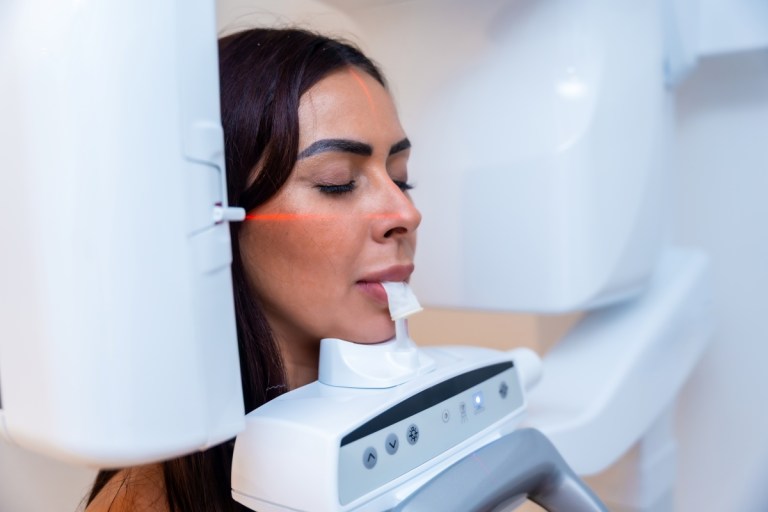
When you prepare for oral surgery, you may think about the procedure itself, but much of the safety and success happens before treatment even begins. Modern dental technology allows oral surgeons to gather detailed information about your anatomy through advanced imaging. These tools provide a clearer view of structures that cannot be seen during a standard exam. By using this information, your surgeon can plan your procedure with greater accuracy and confidence. Understanding how advanced imaging works can help you feel more informed and reassured about your care.
What Advanced Imaging Includes
Advanced imaging refers to technologies that go beyond traditional dental x-rays. One of the most commonly used tools is cone beam computed tomography, often called CBCT. This type of imaging creates a three-dimensional view of your teeth, jawbone, nerves, and surrounding structures.
Unlike standard x-rays, which provide flat images, CBCT scans offer depth and detail from multiple angles. This allows your surgeon to examine areas that would otherwise be difficult to assess. The result is a more complete understanding of your oral anatomy before any procedure begins.
Why Detailed Imaging Improves Safety
Oral surgery often involves working near sensitive structures such as nerves, sinuses, and blood vessels. Without precise imaging, these areas can be difficult to locate accurately. Advanced imaging helps your surgeon identify these structures and avoid them during the procedure.
For example, when placing dental implants, knowing the exact position of the jawbone and nearby nerves is essential. Imaging allows your surgeon to determine the safest placement and depth for the implant. This reduces the risk of complications such as nerve damage or improper alignment.
Detailed imaging also helps identify hidden issues such as infections, bone loss, or impacted teeth. Addressing these concerns in advance allows your surgeon to adjust the treatment plan and avoid unexpected challenges during surgery.
Planning Procedures With Greater Precision
With advanced imaging, your surgeon can create a customized plan based on your specific anatomy. This planning process often includes measuring bone density, mapping out tooth positions, and evaluating how different structures relate to one another.
In many cases, imaging allows for:
- More accurate implant placement and alignment
- Better evaluation of bone quality and volume
- Clear identification of impacted teeth or abnormal growth patterns
- Improved planning for complex procedures such as bone grafting or jaw surgery
Enhancing Your Overall Experience
By improving surgical accuracy, advanced imaging enhances your overall experience as a patient. When your surgeon has a clear plan, procedures can often be completed more efficiently, which may reduce time in the chair and support a smoother recovery.
You may also feel more confident knowing that your treatment is based on detailed, individualized information. Many providers use imaging to show you exactly what they see, helping you understand the procedure and what to expect.
A Clearer Path to Better Outcomes
Advanced imaging has transformed the way oral surgery is planned and performed. With a detailed view of your unique anatomy, your dental team can make more informed decisions and reduce potential risks. This technology supports safer procedures, more predictable results, and a higher level of patient care.
When you know that your treatment is guided by precise imaging, you can approach your procedure with greater peace of mind. Careful planning leads to better outcomes, and advanced imaging plays a key role in making that possible.